

Applications
Coherent Raman Imaging addressing unmet needs
Coherent Raman Imaging’s technology is broadly applicable thanks to the rich spatial and spectral information it provides, enabling it to address a wide range of unmet needs.
Field-Proven Applications
Leveraging coherent Raman we are able to identify in real-time different chemical compounds, based on their intrinsic molecular fingerprint.
biotech
Histology
Coherent Raman Imaging provides consistent, label-free, high-contrast images for diagnostic purposes.
bubble_chart
Cytology
Coherent Raman Imaging distinguishes between cell types and their origin.
medication
Pharma QC
Coherent Raman Imaging provides chemically specific identification of active ingredients, excipients, polymorphs, and spatial inhomogeneities.
water_drop
Environmental & Food
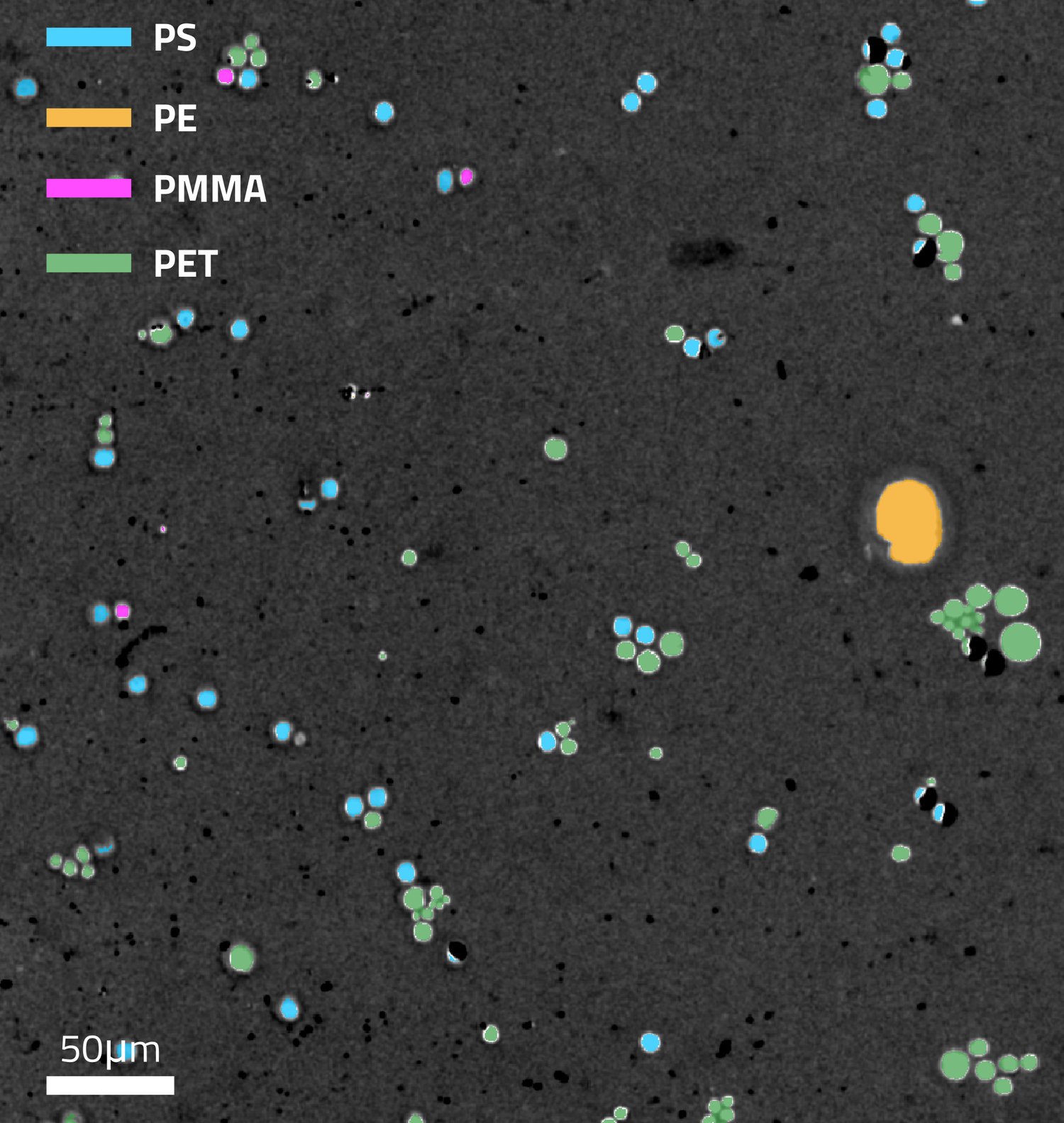
Coherent Raman Imaging detects and identifies microplastics, residues, and contaminants directly in water, soil, and food.
school
Academic Research
Coherent Raman Imaging delivers quantitative, high-resolution chemical insights for life sciences, materials, and chemistry research.
Potential applications
Coherent Raman Imaging is broadly applicable; wherever its fast, spatially resolved chemical information meets unmet needs.
memory
Semiconductor Industry
For high-speed characterisation of bulk semiconductors & layered materials, e.g. large area screening of graphene.
battery_charging_full
Batteries Industry
For in situ and operando studies of degradation processes in batteries thanks to the combination of chemical sensitivity and rapid imaging capabilities.
shield
Defence
For stand-off detection and chemically specific material identification in security and defence scenarios, leveraging fast, label-free imaging.
Histology
Label-free digital imaging for histopathology and medical diagnostics
Faster, reproducible tissue imaging to support diagnosis and treatment decisions.
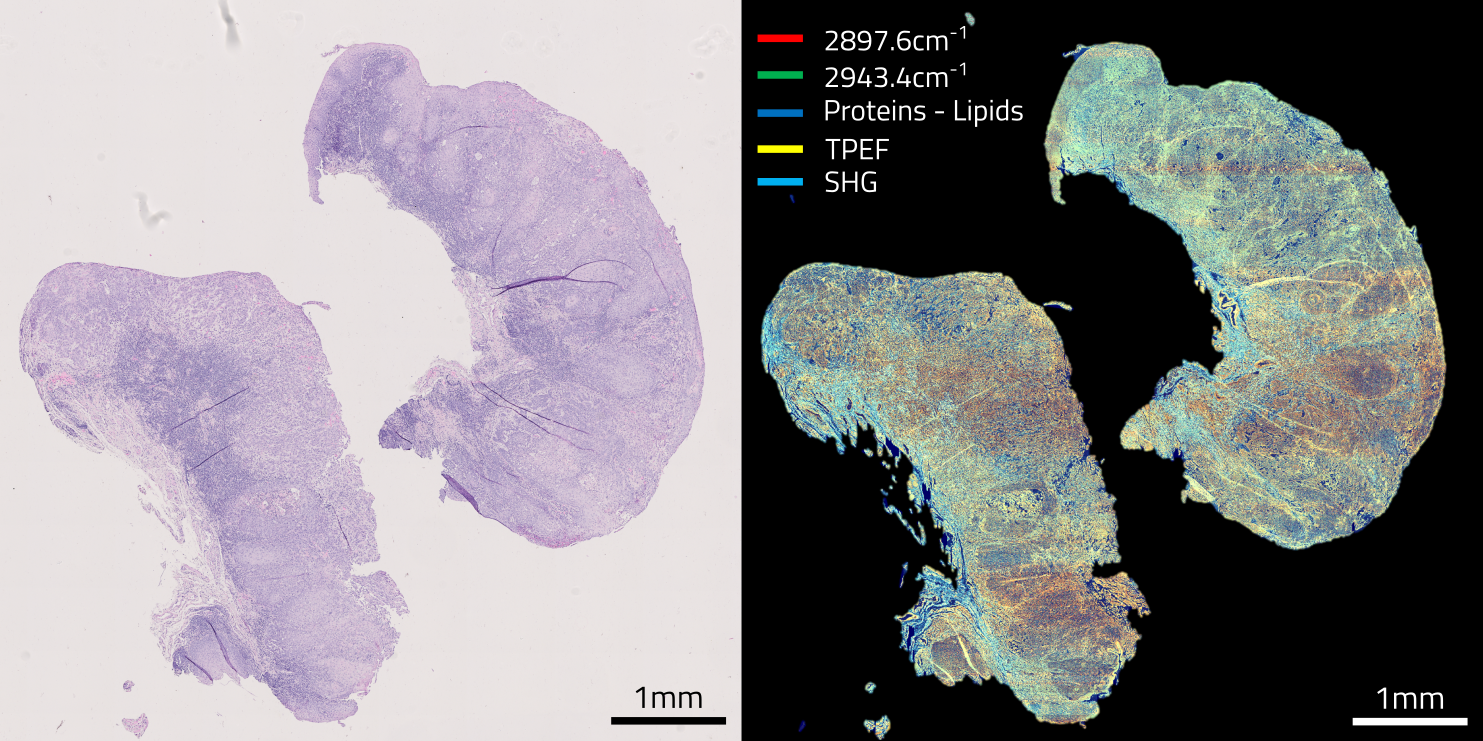
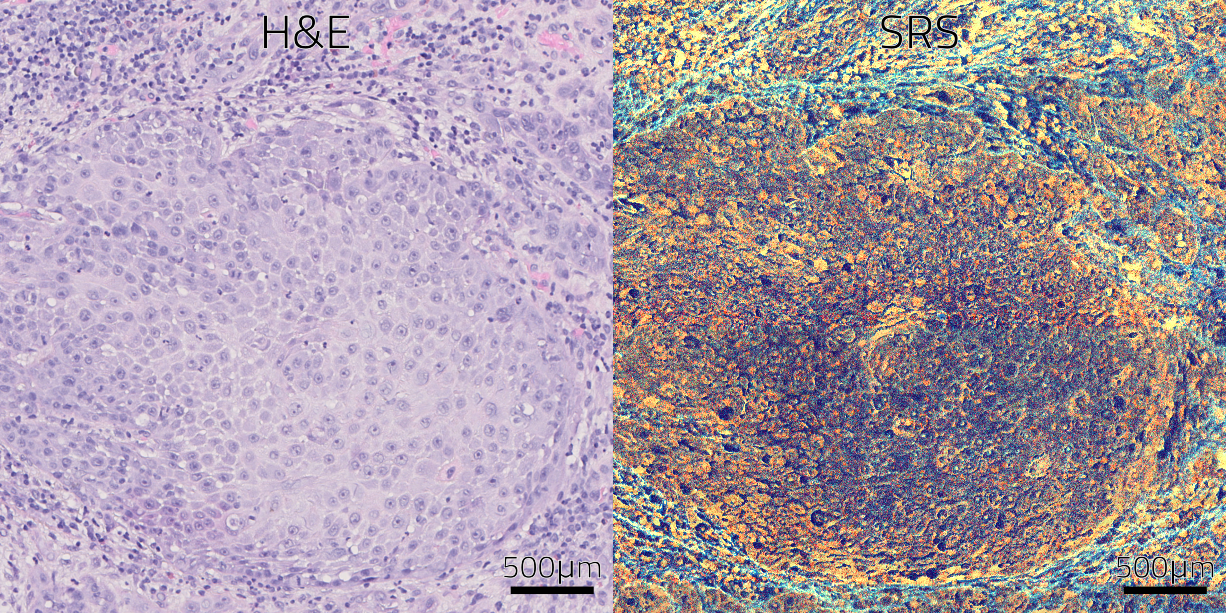
Histopathology remains the cornerstone of medical diagnosis, yet it still relies heavily on conventional staining such as hematoxylin and eosin. These protocols are time-consuming, depend on operator technique, and can introduce variability between laboratories, limiting their reliability in fast or AI-assisted digital pathology workflows.
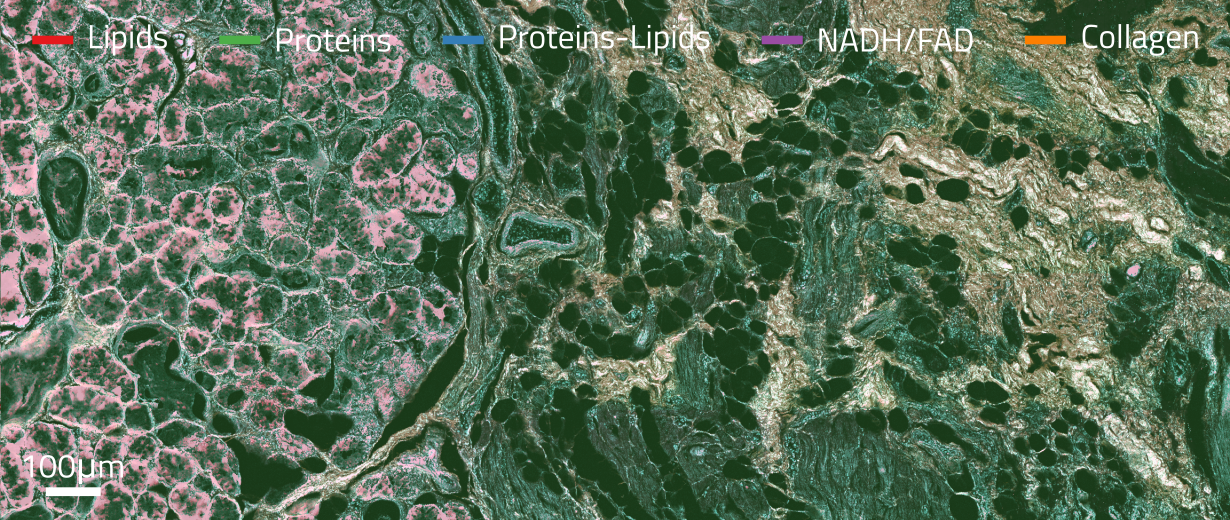
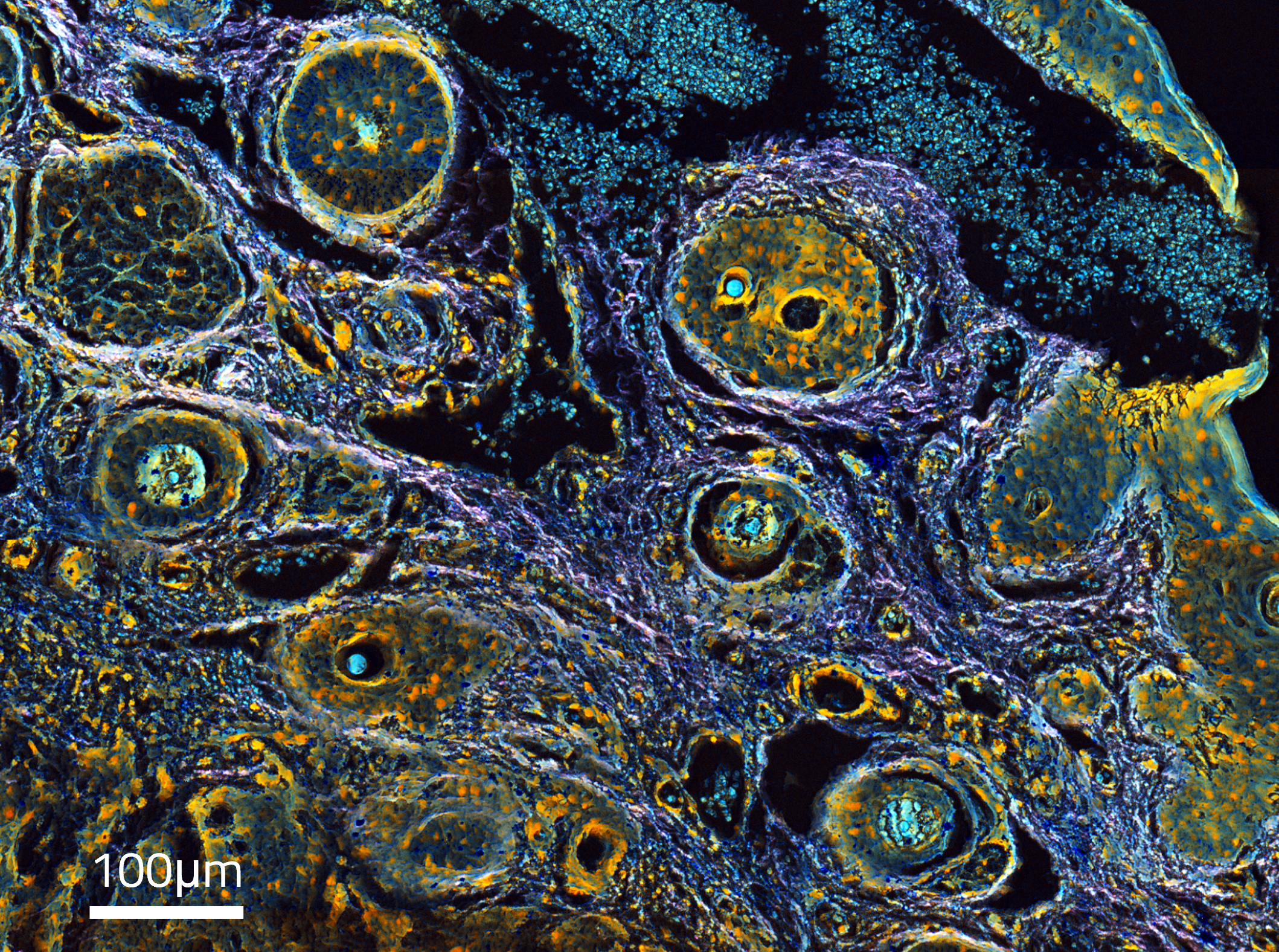
Coherent Raman Imaging enables label-free, high-contrast imaging of tissues based on their intrinsic molecular composition. By probing the vibrational “fingerprint” of lipids, proteins, and nucleic acids, it produces consistent, quantitative images without dyes, preserving the native state of the sample. This supports faster, more objective tissue characterisation and a reliable basis for digital pathology and machine-learning-assisted diagnosis.
This application is at the core of the EU-funded CHARM project, which brings chemometric histopathology to clinical decision support. Learn how the underlying technology works on our Label-free digital imaging page.
Cytology
Label-free digital imaging for cytology
In a field increasingly oriented toward digital pathology, cytology continues to rely heavily on conventional staining techniques. While these methods have long been considered the standard for cellular visualization, they are inherently subject to variability in sample preparation, fixation, and staining protocols across laboratories. These inconsistencies can lead to differences in morphological interpretation and ultimately affect the reliability of downstream digital analysis. Furthermore, staining procedures are time-consuming, may alter cellular morphology, and often require prior assumptions about the sample, limiting their usefulness in rapid or exploratory diagnostic workflows.
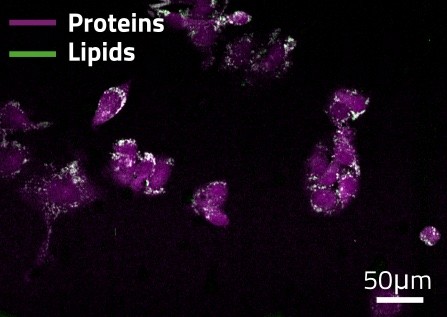
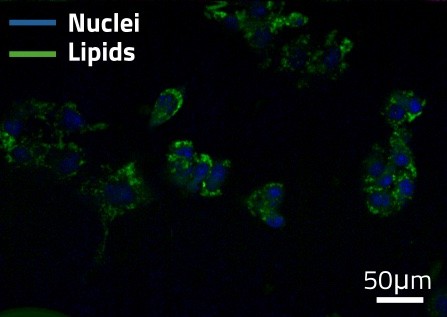
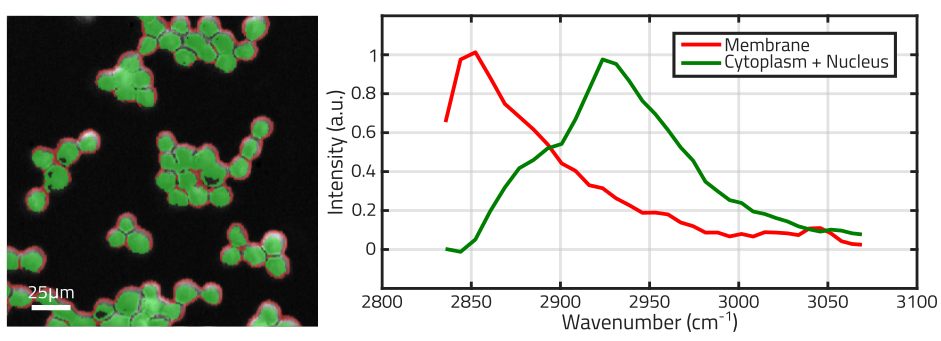
Coherent Raman Imaging offers a transformative approach for cytological applications by enabling label-free, real-time visualization of individual cells and their biochemical composition. By probing the intrinsic vibrational spectrum of cellular components, this technique captures the molecular “fingerprint” of each cell, providing detailed information on lipids, proteins, and nucleic acids without the need for exogenous dyes. This results in highly reproducible, high-contrast images that are inherently quantitative and less dependent on operator technique. As a result, Coherent Raman Imaging enables more consistent identification and classification of cellular populations, supporting faster and more objective cytological assessments while preserving the native biological state of the sample.
Pharmaceutical QC
Label-free digital imaging for industrial quality control
Consistent and chemically specific signatures for robust process monitoring.
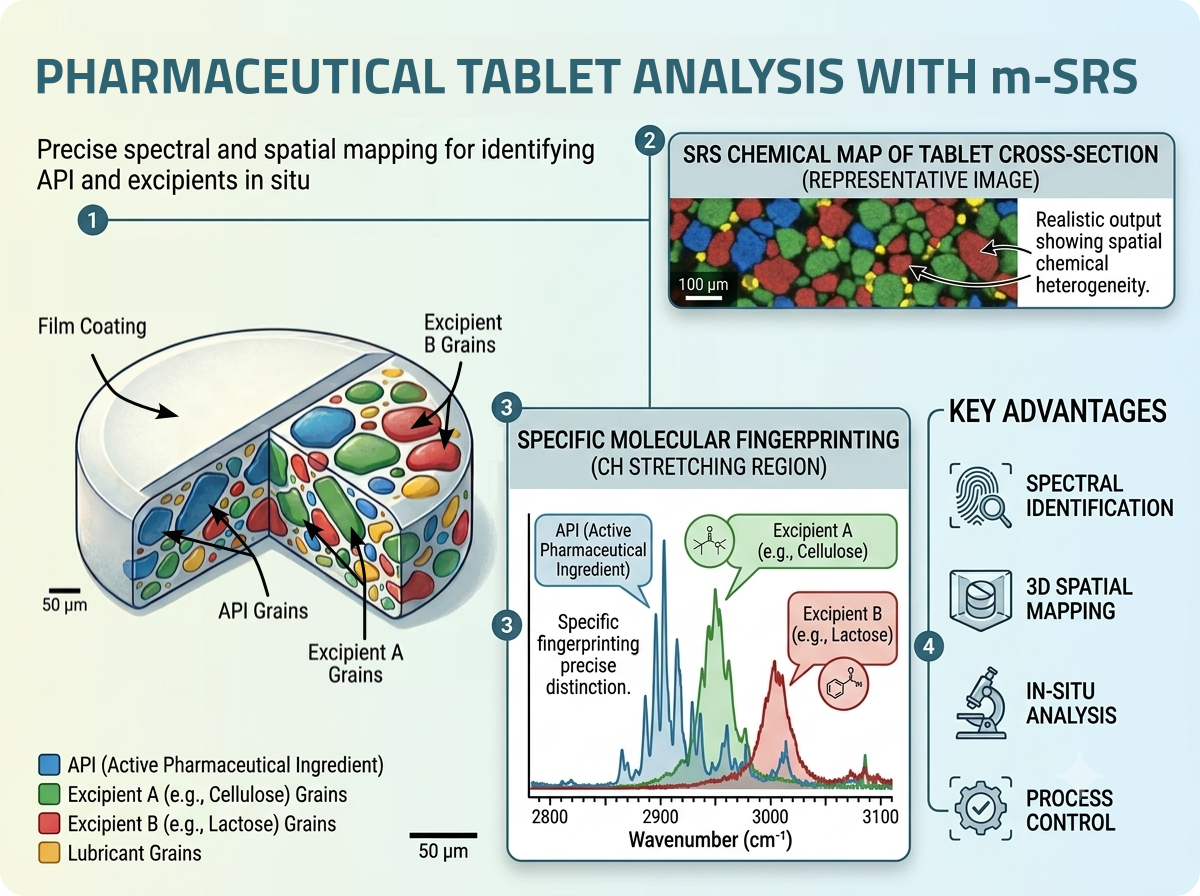
In pharmaceutical tablet manufacturing, the ability to operate directly within the production workflow is critical. Our approach enables integration into the manufacturing process itself, supporting at-line quality control rather than relying on slow, off-line testing. This allows real-time monitoring of tablet composition, uniformity, and structural integrity during production, increasing throughput and enabling faster, more reliable release decisions.
Coherent Raman Imaging is exceptionally well suited to the digitisation of industrial QC processes, as it enables fast, label-free, and non-destructive imaging based on intrinsic chemical contrast. By probing the vibrational spectrum—or molecular “fingerprint”—of a material, it delivers consistent, chemically specific information in real time. In pharmaceutical applications, this allows accurate identification of active ingredients, excipients, polymorphs, and spatial inhomogeneities within tablets without altering the sample.
Environment & Food
Label-free digital imaging for environmental and food quality control
Reliable chemical insights for safer ecosystems and food production.
In environmental monitoring and food production, the ability to perform rapid, non-destructive analysis directly within operational workflows is increasingly important not only for efficiency, but for public health. The quality of what we eat and drink has a direct impact on the onset of diseases, from chronic conditions linked to contaminants and adulterants to acute risks caused by pollution and microbiological hazards. Enabling real-time, in-line assessment of contamination, composition, and structural integrity helps prevent harmful substances from reaching consumers.
Coherent Raman Imaging is particularly well suited for this shift, as it provides fast, label-free, and non-invasive imaging based on intrinsic chemical contrast. In environmental applications, this enables the detection and identification of pollutants such as microplastics, chemical residues, or organic contaminants directly in complex matrices like water, soil, or air particulates. In food applications, it allows accurate characterization of ingredients, detection of adulterants, and identification of foreign bodies or spoilage processes without altering the sample.
Academic research
Label-free digital imaging for academic research
Quantitative, high-resolution chemical insights for advanced scientific discovery.
In academic research, studying complex systems in their native state with high spatial and chemical resolution is key to obtaining reliable insights. Our approach supports minimal sample preparation and seamless integration into laboratory workflows, enabling faster, iterative experimentation while preserving analytical rigor.
Unlike conventional techniques that rely on staining or destructive preparation, label-free digital imaging preserves sample integrity and reduces variability. This is particularly important in multidisciplinary fields, where interactions must be observed without perturbation, and for longitudinal studies that track dynamic processes over time.
Coherent Raman Imaging provides fast, high-resolution imaging based on intrinsic molecular contrast. Across life sciences, materials research, and chemistry, this approach supports the study of biological processes, material composition, and reaction mechanisms in realistic conditions. Combined with advanced data analysis and machine learning, it enables reproducible, scalable, and data-driven research workflows, accelerating discovery.
Would you like to be an investor?
The applications of this technology currently have a Total Addressable Market in excess of USD 6 bio. with CAGR above 11%.
Statements about future products represent management intentions, but are not to be considered commitments to any specific clinical or non-clinical capability or performance targets.